Leather furniture rewards routine care, but it punishes guesswork. A sofa may look durable, yet sunlight, body oils, dust, and dry indoor air slowly change its surface. The best answer to “What Is the Best Way to Maintain Leather Furniture?” is not one miracle conditioner. It is a measured system of cleaning, protection, inspection, and restraint.
Market research shows why this subject matters. Fortune Business Insights estimates that the global leather furniture market was worth more than $30 billion in 2023. Grand View Research also identifies premium materials and longer product life as important market trends. These reports describe commercial growth, not guaranteed durability. Still, they underline one practical truth: maintenance protects a meaningful household investment.
Leather-care educator Don Gonzales offers a useful rule: “Test every product before using it widely.” That advice belongs at the center of how to maintain and care for leather furniture. First, identify the leather finish from the manufacturer’s label. Then remove loose dust with a soft vacuum brush. Wipe spills quickly with a clean, barely damp cloth. Never soak the hide. Apply only a compatible conditioner, and use less than you think. Too much product can leave greasy patches and attract dirt.
Keep furniture away from radiators and strong windows. Rotate cushions when the design allows it. I have seen owners overcondition leather, hoping for extra softness; the result looked dull instead. That mistake is easy to repeat. Care should be gentle, documented, and adjusted after each inspection. A professional cleaner remains the safest choice when dye transfer, cracking, or deep staining appears.
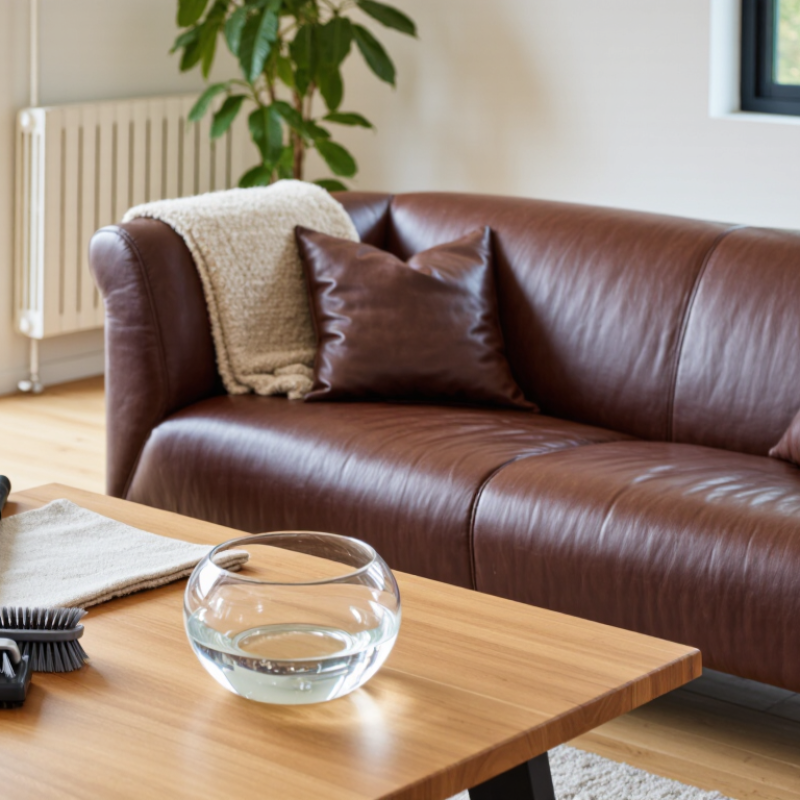
Before cleaning leather furniture, identify its finish. The surface may be aniline, semi-aniline, pigmented, or protected leather. Each reacts differently. Aniline leather feels warm and shows natural pores, scars, and color variation. A small water drop usually darkens it quickly. Pigmented leather feels more uniform because a protective coating covers much of the surface.
This distinction matters. Leather Naturally’s technical guidance explains that pigments and polymer coatings improve color consistency and surface protection, while reducing the leather’s natural appearance. ISO 11644 also evaluates coating adhesion, showing why aggressive rubbing can damage a finished surface. In practice, inspect an unseen area first. Use a white cotton cloth. Apply one small drop of distilled water, then wait ten minutes. Do not rely on appearance alone. Some protected leather can still absorb moisture.
For aniline leather, dust with a soft brush and avoid household detergents. Its open surface can develop dark rings from body oil, spilled drinks, or damp cloths. Semi-aniline leather tolerates slightly more careful wiping, but still needs restraint. Pigmented leather usually accepts a pH-balanced leather cleaner, applied to the cloth rather than directly onto the cushion. Keep the cloth barely damp. Too much water is a common mistake. I have found that rushed cleaning often creates a larger mark than the original spill. Test patches can look acceptable at first, then dry unevenly. Allow the area to dry naturally, away from radiators and strong sunlight.
Look for natural pores, scars, and uneven color. Aniline leather feels warm and darkens quickly under one water drop. Pigmented leather looks more uniform because a protective coating covers it. Test an unseen area first.
Place one small drop of distilled water on a hidden area. Wait ten minutes. Watch for darkening or absorption. Do not trust appearance alone; protected leather may still absorb moisture.
Remove dust with a soft brush. Avoid household detergents and wet cloths. Open pores can develop dark rings from oil, drinks, or moisture. Keep it gentle.
Semi-aniline leather allows slightly more careful wiping. Pigmented leather usually accepts a pH-balanced leather cleaner. Apply cleaner to a cloth, not directly to the cushion. Keep the cloth barely damp.
Excess water can spread the original mark. A test patch may look fine while wet, then dry unevenly. I have made this mistake before. Slow work is less impressive, but safer.
Keep relative humidity between 40% and 55%. Measure it near the furniture with a small digital hygrometer. Dry heated air can make leather feel tight and stiff. Small seasonal changes matter.
Keep sofas away from radiators, fireplaces, vents, and strong sunlight. Uneven heat can dry one armrest more than another. Place a humidifier several feet away. Check the humidity reading daily.
Dust leather furniture weekly with a soft brush or low-suction upholstery vacuum. Clean seats, seams, cushion gaps, arms, and backrests slowly. Avoid rotating floor heads and hard plastic attachments. Narrow gaps collect surprising amounts of grit.
The best way to maintain leather furniture begins with identifying its finish, since different surfaces may require different cleaning and conditioning methods. Keep indoor relative humidity between 40% and 55% to help prevent excessive drying, stiffness, and premature cracking. Remove dust and loose debris once a week with a soft brush or an upholstery vacuum, using gentle pressure to avoid scratching the leather.
For spills, act within five minutes by blotting the area carefully and applying a suitable pH-balanced leather cleaner according to the furniture’s finish. Avoid harsh household chemicals and excessive moisture, which can cause discoloration or damage. Apply a compatible leather conditioner every six to twelve months to preserve softness and flexibility. If cracks, deep stains, or serious surface damage appear, seek professional repair rather than attempting aggressive treatments. These simple habits provide a practical guide on how to maintain and care for leather furniture while extending its appearance, comfort, and service life.

 Ambrose Home