How to Choose Furniture for Rental Apartments in 2026?

Time:2026-10-31 Author:Sophia
0%

Choosing furniture for a rental apartment in 2026 means balancing comfort, flexibility, and the limits of a temporary home. A sofa may look compact online yet block a narrow hallway. A dining table can work as a desk, but only if its height and placement suit daily use. Small details matter.

This guide explores how to choose furniture for rental apartments with practical checks for room measurements, durability, storage, and budget. Measure doorways and stairwells before ordering. Check whether a bed frame can be dismantled, whether a desk fits beside a window, and whether a rug can handle frequent foot traffic. Favor pieces that serve more than one purpose, such as an ottoman with storage or a folding table for occasional guests. But multipurpose furniture is not automatically better; awkward mechanisms and poor proportions can make it frustrating.

A reliable plan also considers what happens at move-out. Lightweight pieces, replaceable covers, and standard-sized furniture can be easier to transport or reuse elsewhere. Renters should confirm which changes their lease permits before adding wall-mounted shelves or other fixtures. Still, no checklist can predict every room. A slightly imperfect fit may be acceptable if the furniture feels comfortable, leaves clear walking space, and supports the way you actually live.
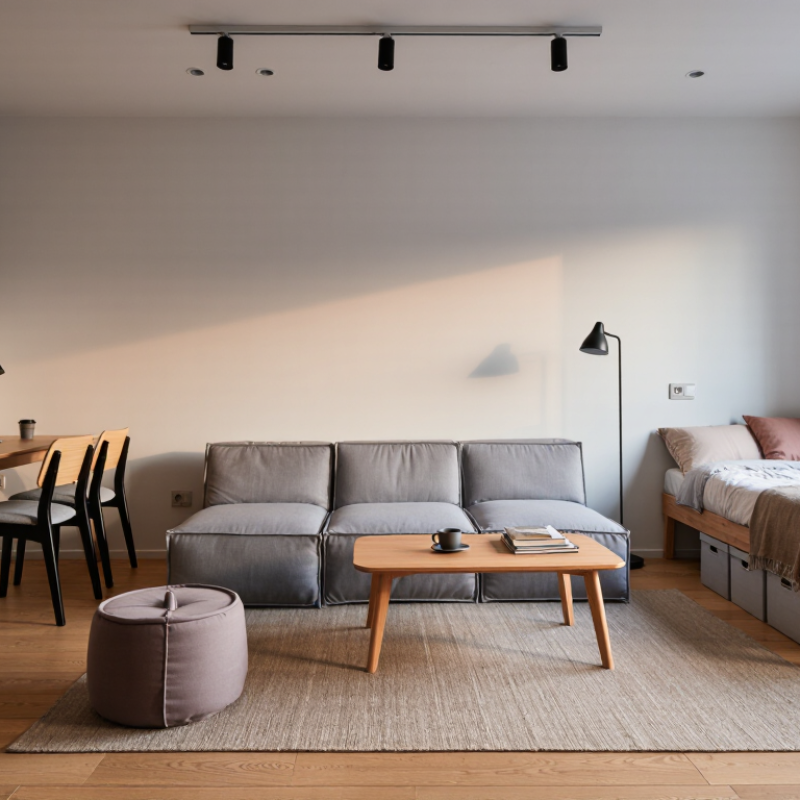
How to Choose Furniture for Rental Apartments in 2026?

Assess Space: RentCafe Put the 2023 U.S. Apartment Average at 887 Sq. Ft.

A 2023 U.S. apartment-size report placed the average rental unit at 887 square feet. That figure is a useful starting point, not a furniture plan. Averages can hide narrow entryways, awkward corners, and bedrooms that barely fit a queen bed. Measure each room, doorway, closet opening, and elevator before ordering anything. Sketch the floor plan, then mark window and door swings. Small details matter.

In an 887-square-foot home, choose pieces by footprint and function. A sofa around 72 inches wide may leave more walking space than an oversized sectional. Look for a dining table that folds or seats two comfortably, and storage that uses vertical space without blocking light. Keep roughly 30 inches for main walkways where the layout allows. Check delivery dimensions, too; a couch that fits the living room may not clear the stair turn. Easy to miss.

For rental apartments in 2026, movable furniture can adapt to different floor plans and future moves. Measure twice. Still, a tape measure cannot tell you whether a room will feel crowded after unpacking. Leave some breathing room, and resist filling every empty corner.

Measure Room Dimensions, Doorways, and Clearances Before Choosing Furniture

Before choosing furniture for a rental apartment, measure each room, doorway, hall, and stair turn—not just the empty floor area. Record wall lengths between baseboards, window positions, heater locations, and the swing of every door. Then compare those numbers with the furniture’s full dimensions, including arms, legs, and reclined depth. A sofa may fit on paper but still block a closet when its cushions extend outward.

Check the delivery path with a tape measure. The U.S. Access Board’s 2010 ADA Standards specify a 32-inch minimum clear width for accessible door openings; this is an accessibility benchmark, not a universal furniture rule. The National Kitchen & Bath Association’s planning guidelines recommend 42-inch work aisles for one cook and 48 inches for multiple cooks. Those figures apply to kitchen work aisles, but they’re useful reminders that clearance matters as much as fit. Leave practical walking space around beds and dining chairs, too. Small errors add up.

Use painter’s tape to mark a furniture footprint before ordering. Measure again. It sounds repetitive, but it catches awkward corners. Rental layouts can be irregular, and a sketch rarely shows every trim or radiator. Even careful measuring has limits; confirm the delivery team’s access requirements before you commit.

Set a Budget Around Rent, Lease Length, Delivery, and Assembly Costs

How to Choose Furniture for Rental Apartments in 2026?

A furniture budget should fit both your rent and your expected stay. Start with the amount left after rent, utilities, and regular expenses, rather than choosing a total based on a showroom visit. For a one-year lease, a sturdy bed, table, and comfortable chair may matter more than filling every corner. If you may move soon, prioritize pieces that are light, compact, and easy to reuse. I have found that move-out plans often change, so avoid assuming every purchase will suit your next home.

Tips: Set a firm spending cap before shopping. Add delivery, stair carries, assembly, and possible packaging removal. Ask for the full fee in writing; a low furniture price can become less attractive after those costs.

Compare the total cost with the lease length. A $600 sofa used for twelve months costs about $50 per month, before delivery or resale. That figure is only a guide, not a perfect measure of comfort or value. Check doorways, elevator dimensions, and assembly requirements before ordering. Keep a small reserve for unexpected fees. It may feel cautious, but a delayed delivery or missing tool can disrupt a tight move-in week.

How to Choose Furniture for Rental Apartments in 2026?

Set a budget around rent, lease length, delivery, and assembly costs.

Example planning scenario: With monthly rent of $1,800 and one-time furniture costs of $1,200, delivery of $120, and assembly of $180, the total setup cost is $1,500. Spread that cost across the lease term: it equals 13.9% of rent per month on a 6-month lease, 6.9% on a 12-month lease, and 3.5% on a 24-month lease. These are illustrative figures, not market averages; use local quotes and your actual rent before setting a budget.

Choose Durable, Multifunctional Pieces for Small Rental Layouts

How to Choose Furniture for Rental Apartments in 2026?

Rental rooms often need to function as lounges, dining areas, and occasional workspaces. Measure doorways, wall lengths, and walking routes before shopping. A compact sofa with raised legs can keep a room feeling open, while an extendable table serves meals and guests. Choose washable covers and sturdy joints over showroom polish. The U.S. EPA’s 2018 Advancing Sustainable Materials Management report recorded 12.1 million tons of furniture and furnishings waste, with roughly three-quarters landfilled. Repairable construction is a sensible priority, though one purchase cannot solve the larger waste problem.

Tips: Measure twice. Lift chairs to check for wobble, and test whether drawers open without blocking a walkway. Aim for about 30 inches of clearance on main paths when the layout allows.

Multifunction furniture needs to work in real life, not just on paper. A bed with drawers can replace a chest, but only if the drawers clear the wall and baseboard. Nesting tables and stackable stools add seating without permanently crowding the room. One caveat: a folding desk can become a clutter shelf if it is awkward to open. Leave a little empty floor space; it is useful, even when it feels like wasted room.

Prioritize Reuse: EPA Reports 12.1 Million Tons of U.S. Furniture Waste in 2018

A rental apartment’s furniture plan can reduce both move-in costs and bulky waste. The U.S. EPA estimated that 12.1 million tons of furniture and furnishings entered the municipal waste stream in 2018. That was 4.1% of all municipal solid waste. About 9.4 million tons were landfilled, according to EPA’s Advancing Sustainable Materials Management report. A heavy footprint. Rental units turn over often, so sturdy tables, bed frames, and shelving can serve multiple tenants. Choose common dimensions and neutral finishes; replaceable screws and washable covers make repairs easier. Keep an inventory, photograph existing pieces, and offer usable items to incoming tenants before ordering replacements.

The U.S. Census Bureau’s 2023 housing data show that roughly one-third of occupied U.S. homes are renter-occupied. Reuse can be a practical operating choice, not only an environmental gesture. Still, reuse is not automatic. Check wobbling joints, sharp edges, odors, and mattress condition; remove items that cannot be made safe or clean. A secondhand sofa may not suit every layout, and storing unwanted furniture can simply move the problem elsewhere. Measure doorways and rooms before purchasing. Also, be honest about wear: a scuffed table may be perfectly serviceable, while a damaged chair may not be worth saving.

How to Choose Furniture for Rental Apartments in 2026? - Prioritize Reuse: EPA Reports 12.1 Million Tons of U.S. Furniture Waste in 2018

Decision dimension What to check Rental-friendly choice Evidence or practical basis
Reuse before buying new Check whether suitable furniture is already available, can be borrowed, or can be bought second-hand. Prioritize clean, safe, repairable used pieces; buy new only when reuse does not meet your needs. The EPA estimated that 12.1 million tons of furniture and furnishings were generated in the United States in 2018. EPA’s waste-management hierarchy favors source reduction and reuse over recycling and disposal.
Room and access measurements Measure the intended space and the narrowest route into it, including doorways, hallways, stairs, and elevator openings. Choose pieces whose listed dimensions and delivery path fit the actual apartment; do not rely on room size alone. Furniture dimensions and access clearances vary by apartment and building, so measurements should be taken for the specific rental.
Moveability Check item weight, whether it can be disassembled, and whether its parts can be moved safely. Prefer modular or knock-down designs with clear assembly instructions and replaceable fasteners. Furniture that can be taken apart is generally easier to transport through tight access routes and between rentals.
Durability and repair Inspect joints, frames, hinges, drawer slides, upholstery seams, and the availability of replacement parts. Choose sturdy construction that can be repaired rather than furniture with damage that affects stability or safe use. Repairable furniture can remain useful longer and may avoid premature replacement; inspect used items before purchase.
Multi-purpose use Consider whether a piece can serve more than one everyday function without compromising safe use. Consider options such as a storage ottoman, nesting tables, or a desk that can also serve as a dining surface. Multi-purpose pieces can help make limited apartment space work harder and reduce the number of separate items needed.
Rental rules and surfaces Review the lease and building rules for delivery, assembly, wall attachment, and disposal; check whether furniture may mark floors or walls. Use suitable floor protectors and favor freestanding storage if wall mounting is not permitted or approved. Lease terms and building requirements differ, so confirm them with the landlord or property manager before installation.
Safe condition Check for structural damage, sharp edges, unstable parts, odors, pests, and applicable product safety information. Do not reuse an item that is unsafe or has an unresolved pest concern; follow assembly and anchoring instructions where applicable. Reuse should not come at the expense of safety. Check relevant safety notices and follow the furniture maker’s instructions.

Sources: U.S. EPA, Furniture and Furnishings: Material-Specific Data; U.S. EPA, Sustainable Materials Management and the Waste Management Hierarchy.

FAQS

What does an 887-square-foot average tell me about furnishing an apartment?

It offers a starting point, not a furniture plan. Measure each room because narrow entries and awkward corners can change what fits.

What should I measure before ordering furniture?

Check rooms, doorways, closet openings, and elevator dimensions. Mark window and door swings on a simple floor plan. Easy to miss.

What furniture sizes may work in a smaller apartment?

A sofa around 72 inches wide may preserve walking space better than a large sectional. A folding table can suit meals for two.

How much space should I leave for walkways?

Aim for about 30 inches on main routes where the layout allows. A tape measure helps, but it cannot predict how crowded unpacking will feel.

Which furniture is useful when I might move soon?

Choose pieces that are light, compact, and easy to reuse. Movable furniture can adapt to another floor plan, though plans sometimes change.

How should I set a furniture budget?

Start with money left after rent, utilities, and regular expenses. Set a firm spending cap before shopping.

What extra costs should I include?

Add delivery, stair carries, assembly, and packaging removal. Ask for the full fees in writing; a low price can grow.

How can I compare a furniture cost with my lease?

A $600 sofa used for 12 months costs about $50 per month, before delivery or resale. It is only a rough guide.

What should I prioritize for a one-year lease?

Focus on a sturdy bed, table, and comfortable chair. I might still leave one corner empty; filling every space can feel like a mistake.

Conclusion

Learning how to choose furniture for rental apartments begins with understanding the space. The average U.S. apartment was reported to be 887 square feet in 2023, but individual layouts can vary considerably. Measure each room, along with doorways, hallways, and the clearance needed to open doors and move around comfortably. These measurements help you avoid pieces that are difficult to deliver or that make a small room feel crowded.

Set a realistic budget that accounts for rent, how long you expect to stay, delivery, and assembly. Choose durable, versatile furniture that can serve more than one purpose and adapt to different layouts or future moves. Whenever possible, reuse or buy secondhand pieces in good condition instead of purchasing everything new. This can reduce costs and help limit furniture waste, which reached 12.1 million tons in the United States in 2018.

Sophia

Sophia

Sophia is a dedicated marketing professional with an exceptional depth of knowledge about her company's products and services. With a keen understanding of market trends and customer needs, she crafts insightful blog posts that not only inform but also engage readers, enriching the company’s online......