Wooden furniture can look solid, yet it remains responsive to its surroundings. The question “why does wooden furniture warp over time” begins with moisture. Wood naturally absorbs and releases water from the air. This movement changes across the grain, especially during humid summers and dry winters. A tabletop may swell, while its underside stays comparatively dry. That uneven movement can create cupping, bowing, twisting, or open joints.
Daily observations support this explanation. A cabinet beside a radiator often develops cracks sooner than one kept in a stable room. Direct sunlight can heat one surface unevenly. Water left beneath a plant pot may also damage a finish and enter the wood. Poorly seasoned lumber, thin panels, and weak joinery increase the risk. Even high-quality furniture is not completely immune.
Careful construction helps. Kiln-dried wood, balanced panel design, protective finishes, and sufficient expansion space can reduce stress. Indoor humidity near a moderate, stable range is generally safer than constant fluctuation. Use a hygrometer when the room feels unusually damp or dry. Keep furniture away from heating vents, radiators, and persistent leaks. Wipe spills promptly.
Still, prevention is not perfection. Wood species, grain direction, finish quality, and local climate all matter. A small curve may be harmless, while a growing split deserves professional inspection. Do not force a warped door closed. That can worsen the joints. Understanding the material leads to better decisions, not unrealistic expectations. Wood moves because it is natural. That movement is manageable when its environment and construction are treated with respect.
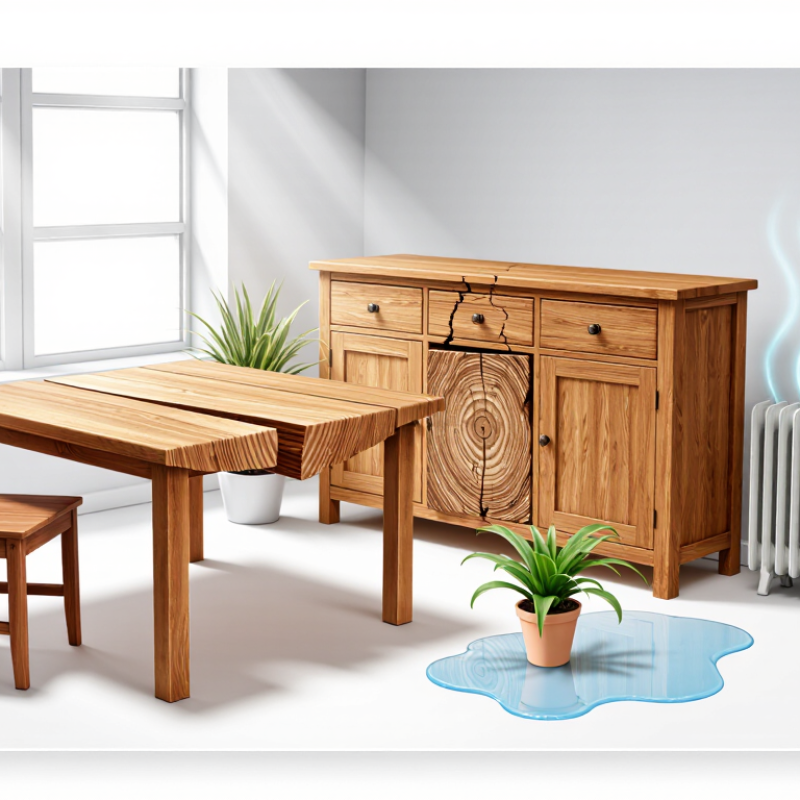
Wood is a cellular material, not a perfectly stable surface. Its fibers contain tiny spaces that absorb and release moisture. Changes in humidity make these cells expand or contract.
The USDA Forest Products Laboratory’s Wood Handbook reports that wood may shrink 6–12% tangentially and 2–8% radially during drying, depending on species. Tangential movement follows the growth rings. It usually causes wider boards to cup or bow.
Indoor furniture commonly reaches about 6–8% moisture content, according to the same handbook. Seasonal humidity can push that balance higher or lower.
A tabletop near a radiator may dry unevenly. Its upper surface contracts first, while the underside remains damp. That difference creates stress.
A cabinet door may twist, and a drawer may suddenly stick.
Practical inspection matters. A moisture meter can reveal hidden changes before warping becomes obvious. Furniture makers also leave room for movement around screws, panels, and joints. Rigid construction often fails when wood cannot move naturally.
I once assumed thicker boards would resist every change. That is not always true.
Grain direction, drying quality, and ventilation can matter more. The Forest Products Laboratory also identifies uneven moisture exposure as a major cause of distortion.
A damp wall, wet floor, or poorly sealed edge can quietly reshape furniture over time.
Wood absorbs moisture in humid air and releases it in dry air. Uneven changes can bend boards, loosen joints, or make drawers stick. Wood is never perfectly still.
Indoor humidity near 40–60 percent usually reduces seasonal movement. Local climate still matters. A small hygrometer can reveal hidden changes.
Wood moves more across its grain than along its length. A tabletop may widen during a damp summer and shrink near winter heating. The change can be surprisingly visible.
Avoid radiators, air vents, bathrooms, damp walls, and bright sunny windows. Direct heat can dry one side quickly. Condensation can swell another side.
No finish completely stops moisture exchange. Coatings slow movement, but edges, joints, and end grain may remain exposed. I once believed “sealed” meant stable, but that was too simple.
Do not force it open. Forcing may damage the joints or split the wood. Check room humidity and allow gradual adjustment.
Framed doors with floating panels allow more movement than single wide boards. Balanced back panels and elongated fastener holes can reduce stress. Good design matters.
Let new furniture adjust indoors before assembly or heavy use. This helps it reach local moisture conditions. It is useful, though not foolproof.
Use a moisture meter and inspect both sides of the furniture. Check hidden undersides, nearby heat, and wall condensation. The cause may be construction, not only humidity.
Thick parts usually respond more slowly than thin parts. They can still warp when moisture changes unevenly. Thickness helps, but it does not guarantee stability.
Why does wooden furniture warp over time? The answer lies in wood’s natural structure. As a porous, organic material, wood continually responds to moisture in the surrounding air. When humidity rises, wood absorbs water and expands; when the air becomes dry, it releases moisture and contracts. Repeated cycles of expansion and contraction can gradually bend, twist, crack, or distort furniture components, especially when different sections dry at different rates.
Environmental conditions such as high humidity, rapid temperature changes, direct sunlight, heating systems, and poor ventilation can accelerate this process. Design and construction also matter: uneven moisture content, insufficient support, improperly joined parts, and the direction of the wood grain may increase the risk of distortion. To reduce warping, keep furniture in a stable indoor environment, avoid placing it near heat or strong sunlight, control humidity, clean spills promptly, and use suitable protective finishes. Properly seasoned wood, balanced construction, and regular care can help wooden furniture remain attractive and structurally sound for many years.

 Ambrose Home